Arctic Marine Biodiversity Network (AMBON)
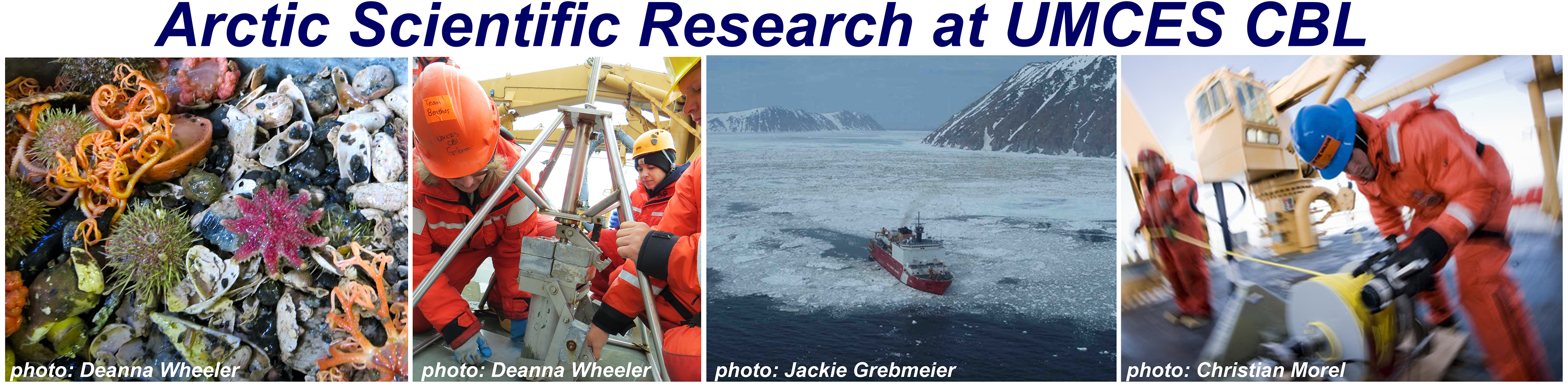
The Arctic Marine Biodiversity Network (AMBON) is a project supported by the National Ocean Partnership Program, which since 2015 has received funding contributions from the Bureau of Ocean Energy Management, the Office of Naval Research, NOAA, and NASA. We are now in the third phase of funding, and fieldwork is coordinated with the Distributed Biological Observatory, Eco-FOCI (a NOAA program of the Pacific Marine Environmental Laboratory and the Alaska Fisheries Science Center), and the Chukchi Ecosystem Observatory. Katrin Iken of the University of Alaska Fairbanks is the lead principal investigator and we are contributing expertise in benthic ecology and biogeochemical drivers of biodiversity. The goal of the Network is to demonstrate and build an operational biodiversity observation network from microbes to high trophic levels in the context of climate change and anthropogenic influences. AMBON has four goals: To close current gaps in taxonomic and spatial coverage in biodiversity observations on the continental shelf; to integrate and synthesize past and ongoing research programs into an Arctic biodiversity network with publicly accessible data; to demonstrate how a sustainable observing network could be developed for this and other regions and ecosystems; to link with international biodiversity programs on the pan-Arctic level.
AMBON is one of six projects currently funded under the Marine Biodiversity Observation Network (MBON) program, which is a component of the Integrated Ocean Observing System (IOOS). MBON biological occurence data submitted to OBIS-USA is also automatically archived at NCEI here
Distributed Biological Observatory (DBO) 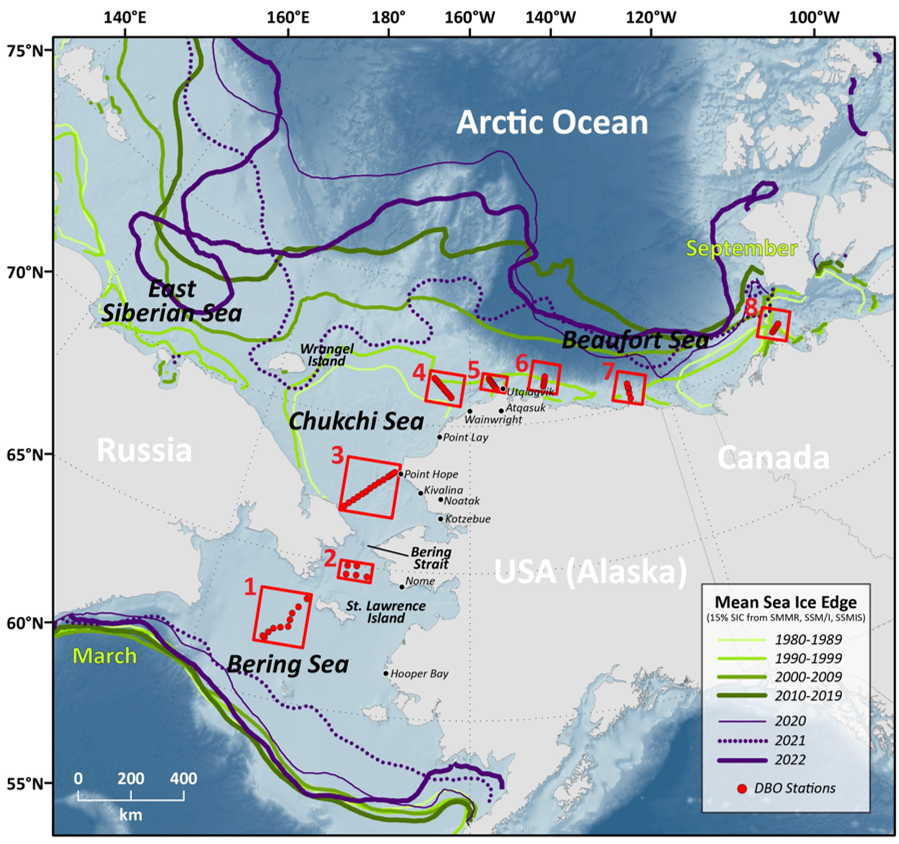
One of the pressing needs for evaluating climate change impacts on biological systems in the Arctic (and globally) is the need for sustained observations of changes in biological systems. Biological observations cannot be automated to the same extent as many physical measurements can (e.g. salinity on moorings, etc.). As a result, there is much less scientific documentation of how biological systems are changing and/or adapting as a result of environmental change. We were involved in a science planning process supported by the National Oceanic and Atmospheric Administration, National Science Foundation, the international Pacific Arctic Group, and the International Arctic Science Committee, to initiate more systematic biological observations in the Pacific Arctic sector. This has evolved into the Distributed Biological Observatory (DBO) which takes advantage of increased multi-national interest in the larger Bering Strait region. Jackie Grebmeier (jgrebmei@umces.edu) is the key contact for this effort and further information on the DBO effort can be found at the DBO website, https://dbo.cbl.umces.edu/.
DBO-Northern Chukchi Integrated Study (DBO-NCIS)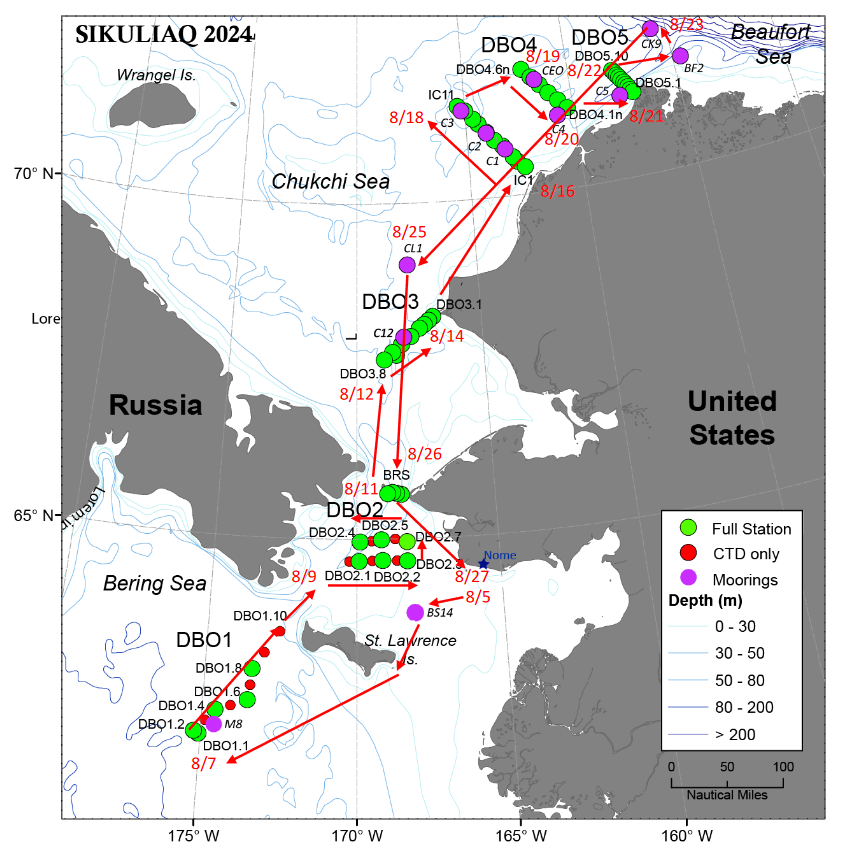
Understanding the impacts of reduced seasonal sea ice and a warming water column on benthic processes are essential to track and forecast ecosystem response in the Pacific Arctic region. Within our research program NOAA supports the Distributed Biological Observatory-Northern Chukchi Integrated Study (DBO-NCIS) for sample collections in the northern Bering and Chukchi Seas of several key water column parameters, phytoplankton species composition, sediment parameters, whole core metabolism measurements, and benthic macrofaunal composition and biomass. Our project goals are to determine hydrographic and sediment characteristics that influence macrofaunal communities and ecosystem function through field and synthesis activities. Our project collaborates with other disciplinary investigators as part of NOAA's Ecosystems & Fisheries Oceanography Coordinated Investigations (EcoFOCI), the Arctic Marine Biodiversity Observing Network (AMBON), and the Chukchi Ecosystem Observatory (CEO). The coordinated research is continuing ongoing time series efforts that are evaluating key processes influencing the status and trends in the Pacific Arctic ecosystem. The annual field cruise also includes sediment and benthic macrofaunal samples collected for investigating harmful algal bloom trophic impacts being undertaken by NOAA-investigators as part of the Alaska Harmful Algal Bloom (HAB) network that is an important issue of food security in the region.
You can read the SKQ2023-12S cruise report here
Sea Floor videos are available to view and download for recent Sir Wilfrid Laurier cruises:
-
2014 full videos
-
2016 clip compilation [below]; full videos
-
2017 clip compilation [below]; full videos
-
2018 full videos
-
2019 clip compilation [below]; full videos
-
2021 clip compilation [below]; full videos
-
2022 full videos
-
2023 full videos
Synoptic Arctic Survey (SAS)
The Synoptic Arctic Survey is a scientific community organized international assessment of the current environmental condition of the Arctic Ocean. We are involved with a US team from Woods Hole Oceanographic Institution, the University of Rhode Island, the University of Massachusetts, Dartmouth, Oregon State University, the University of Alaska Fairbanks, the Bermuda Institute of Ocean Sciences, and Yale University and will be sailing on a research cruise onboard the USCGC Healy in September and October, 2022. A copy of the abstract for the National Science Foundation award is available for download. The object of the cruise is to determine the current state of the Arctic Ocean with respect to many different physical, biological, and chemical characteristics. We will share and compare data we collect with data collected on other transects of the Arctic Ocean undertaken by other countries. Our cruise track will take us through Bering Strait, off the continental shelf to the northwest of Alaska to as far north as the North Pole, and then the ship will return on a more westerly track including the Chukchi Cap. The plan is for re-occupation of the same transects on a decadal basis so changes in Arctic Ocean physics, chemistry and biology can be assessed in the context of on-going climate change.
You can read the HLY2202-SAS Cruise report here and also access the report and other information here.
Selected Completed Projects (with archived information saved as a public service. Use caution with possibly outdated information, addressess, links, etc...):
Pacific Marine Arctic Regional Synthesis (PacMARS)
Chukchi Sea Offshore Monitor in Drilling Area (COMIDA)
US-Russia Census of the Arctic (RUSALCA)
Shelf-Basin Interactions---SBI
Russian American Initiative for Land-Shelf Environments (RAISE)
North Pacific Research Board Bering Sea Project
Selected Cruise Reports
Cruise report from Healy 08-01 (.pdf file)
Cruise report from Healy 09-01 (.pdf file)
Cruise report from Polar Sea 10-01 (.pdf file)